Dec-06-2024 – I have released this working draft, but decided it needs an overhaul. A revision will come in the future
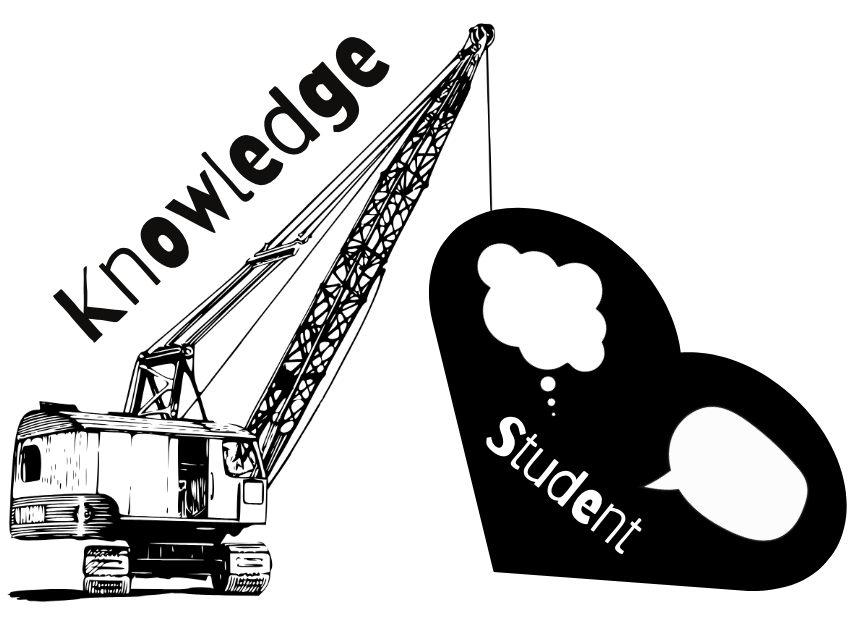
One of the greatest gifts studying epistemology has given me as a teacher is the ability to see knowledge not as static or absolute, but as something dynamic and deeply connected to the processes that lead to it and the people who seek it. Like an engineer looking beyond a nice paint job, and inspecting the structural integrity of a building, I am trained to look beyond the surface of what my students and I claim to know. I push my class to dig deeper, to question whether their understanding holds up, not only analytically or reductively, but also as something meaningful in the context of our lives.
I believe classrooms should move beyond the idea of knowledge as an abstract concept and instead embrace a grassroots perspective that values its connection with context.
How can we guide students to see knowledge as a shared experience, one rooted in their lived perspectives and capable of reaching across boundaries? And how do we foster a learning environment where every idea, every word, is seen as a seed with the potential to grow into something epistemically transformative?
By emphasizing care as a necessary condition for knowledge.
Classrooms as Laboratories of Thought
In my view, inquiry classrooms function as laboratories for student language and thought, where ideas are nurtured, challenged, and given space to grow. Our role as teachers is not to stand as gatekeepers of knowledge but to act as curators, supporting the growth of understanding from within the classroom community.
This idea is not new; it draws on long-standing philosophies of progressive education. However, these philosophies have often been criticized for lacking intentionality and rigor (and sometimes rightfully so). Radical strands of progressive education that “let the kids decide what to learn” or the assumption that “We can just google it” have, at times, undermined the credibility of constructivist or inquiry-based paradigms, providing traditionalists fodder for why we need to go back direct classroom instruction. Thankfully, inquiry educators today are refining their approaches for teaching and learning, incorporating intentional and structural methodologies that balance freedom with guidance and fully embrace student thinking and language (e.g. A few of my favorites are CBI Collaborative, Matt Glover, Patterns of Power).
Knowledge and Care in a Time of Crisis
The alternative to nurturing student thought is a model of education where traditional notions of learning treat knowledge as a fixed commodity, delivered by an hierarchical authority towards knowledge-seeking recipients. While this approach may have sufficed for the industrial era, it leaves students ill-equipped to grapple with the complexity and urgency of today’s challenges.
We also live in a time of the “polycrisis” or “metacrisis,” where interconnected existential threats such as climate change, artificial intelligence, and geopolitical instability not only test our collective knowledge but also reveal our inability to act decisively. These crises underscore the need for an education that moves beyond technical knowledge and integrates understanding with care, fostering the capacity for collective action amidst apathy, denial, and misinformation.
What can schools do when the adults of the world struggle to coordinate solutions for the benefit of Earth’s future? We can tether our notions of knowledge with care in our schools.
Knowledge + Care
Students must become agents who not only know but care: care to understand, care to act, and care to connect their learning to the world around them. Knowledge should emerge from their experiences, not as something locked away in an elite chamber, waiting to be dispensed, learned and regurgitated.
But let me also clarify. I am not just talking about how we can get students to care about topics, but to embody a notion of knowledge, knowledge acquisition, knowledge production, or knowledge demonstration that is bound by care. A notion of knowledge that is required to have elements of care, meaning, or emotion. If an example were to pass a litmus test, care would have to be part of if its constitution.
I am not just talking about how we can get students to care about topics, but to embody a notion of knowledge, knowledge acquisition, knowledge production, or knowledge demonstration that is bound by care. A notion of knowledge that is required to have elements of care, meaning, or emotion. If an example were to pass a litmus test, care would have to be part of if its constitution.
What I propose is that care be a necessary condition for knowledge not just a driver of knowledge. The necessity of care tethered to our concept of knowledge challenges the traditional “justified true belief” paradigm by emphasizing the relational and affective dimensions of knowing. This is likely in the feminist social epistemology camp where knowing is not abstract or disembodied but situated within the contexts, desires, and values of the individual knower or community of knowers.
Let’s take this notion of knowledge + care and couple it a normative and psychological view of why we desire knowledge. Whether seeking, analyzing, or understanding, we inherently care about the subject, its context, or its implications when we learn. Without care, there would be no motivation to inquire, no connection to the knower, and no relevance to lived experience.
And so we have a concept of knowledge fused with care driven by a care for knowledge. Normalize this version of knowledge into our culture, and I think our future will be much brighter.
Experts and authorities certainly will play a role in how to direct our epistemic pursuits, but they will not hold a monopoly on the concept of knowledge. A concept of knowledge that is fused with care, especially for situated knowers, or knowledge seekers whose perspectives are experientially driven. Our students’ lived experiences and the language they use to express what they know are just as vital as an expert from afar.
Perhaps the greatest failure of society today is the inability of people to truly convey and understand each other’s experiences. This disconnect may stem from a concept of knowledge that strips away its emotional and relational elements.
As educators, we have the opportunity and the responsibility to cultivate a richer, more compassionate understanding of knowledge in our students. By centering knowledge on care, and by rooting it in the lived realities of our classrooms and communities, we can help create a generation capable of meeting today’s crises with thoughtfulness, creativity, and heartfelt action.
The starting point is how we structurally and intentionally cultivate and infuse student language and thought into classroom activities around knowledge. In this way, we can curate and foster caring ways of knowing that can move beyond the stagnant notion we currently have.
Thanks for Reading,
Jamie House
P.S. some obvious and practical examples:
Scientific Inquiry and Care: Students investigate how pollution affects local rivers. Their care for their community motivates this exploration and gives their findings significance.
Historical Understanding with Empathy: While studying migration patterns, students connect knowledge about human movement with care for people displaced by wars or disasters, deepening their engagement. How would they feel in these shoes?
What practical examples of knowledge + care do you have?
Reference:
Damiani, J. (2023, November 7). Explaining polycrisis and metacrisis. Reality Studies. https://www.realitystudies.co/p/explaining-polycrisis-and-metacrisis
Stanford Encyclopedia of Philosophy. (n.d.). Feminist social epistemology. In E. N. Zalta (Ed.), The Stanford Encyclopedia of Philosophy (Fall 2023 Edition). Retrieved December 2, 2024, from https://plato.stanford.edu/entries/feminist-social-epistemology/#SocModKnoObj
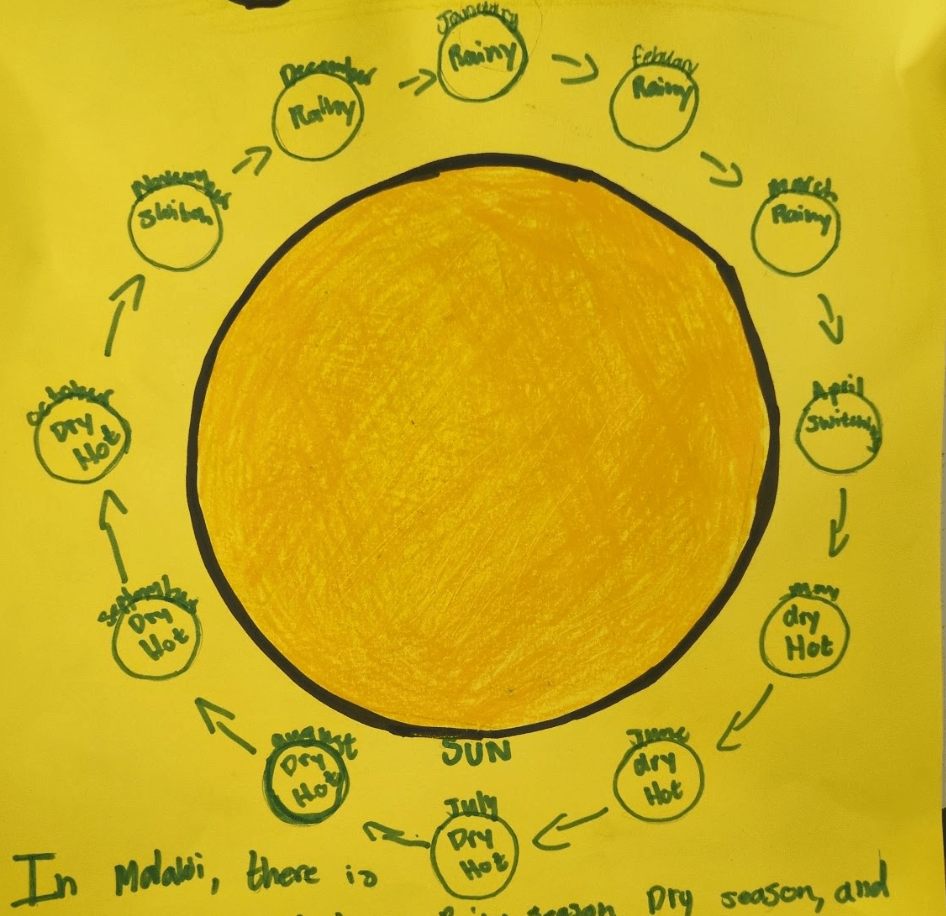
A student’s circle chart that models seasons in Malawi. “Not all seasons are like the one’s in the videos.”

 betterthinkers
Leave a comment